
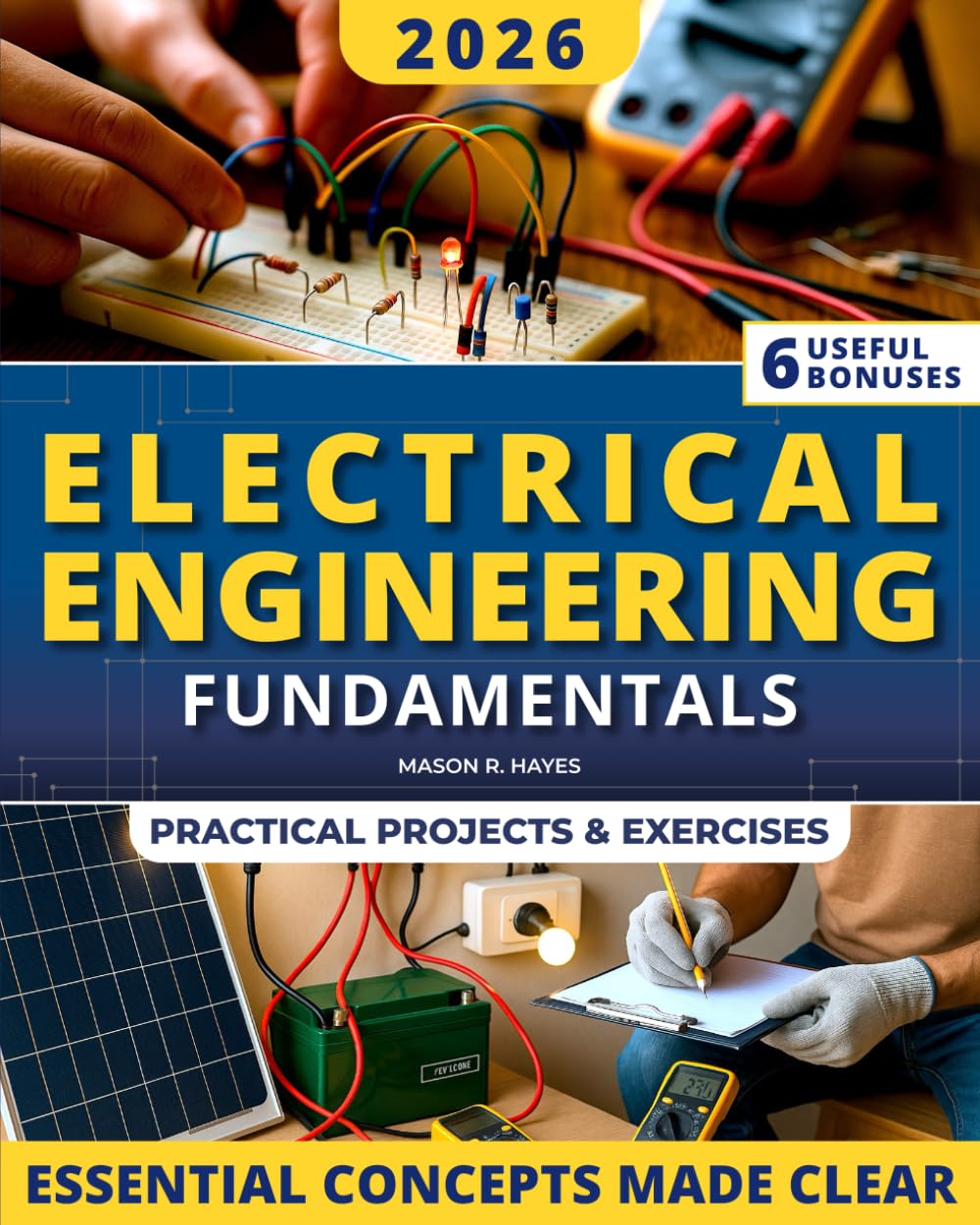
Electrical Engineering Explained Simply – Build Real Understanding, Not Just Memorization
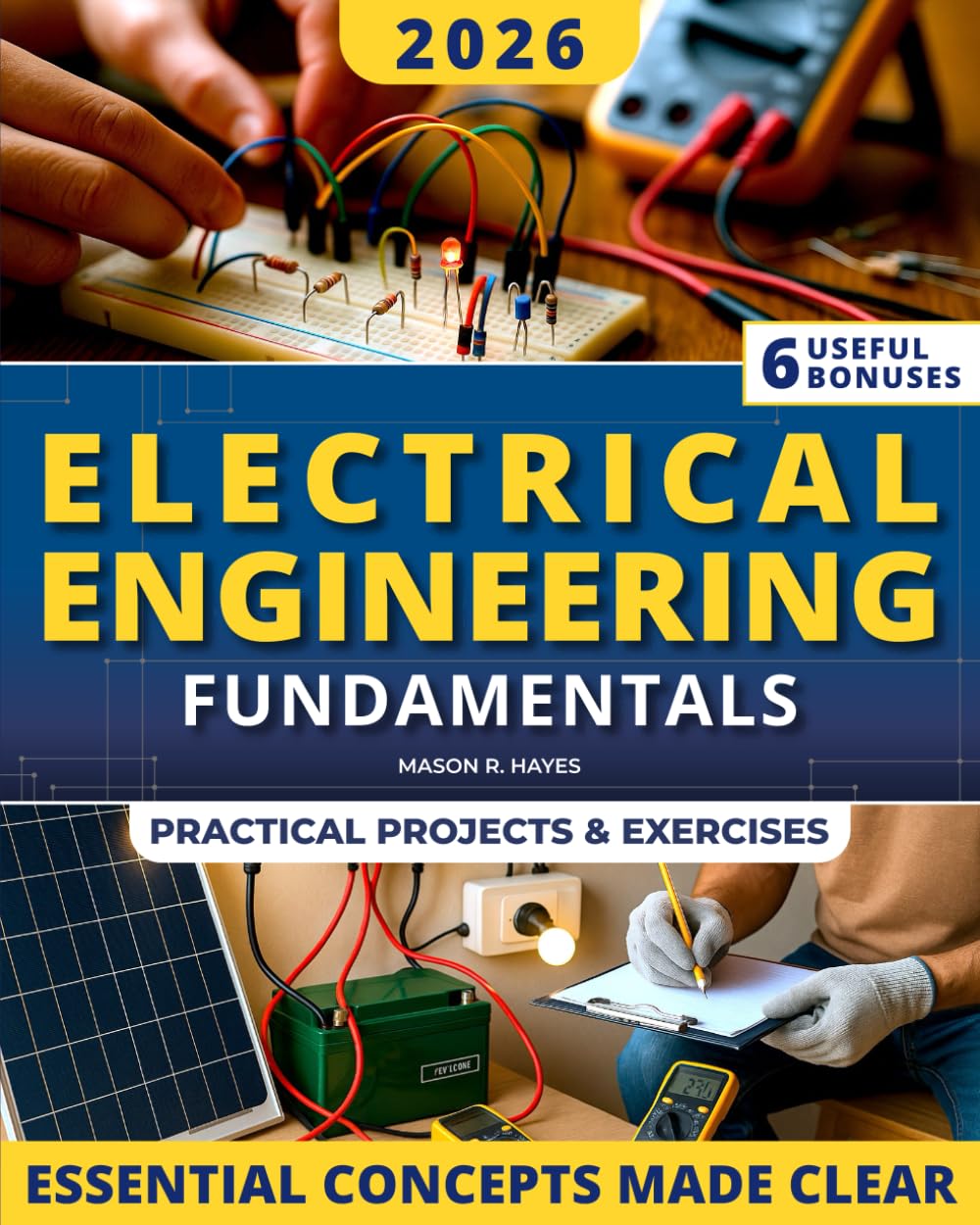
Introduction
Electrical engineering is often seen as one of the most difficult technical fields to learn. Many students struggle because concepts like voltage, current, resistance, and power are usually taught in isolation without showing how they connect.
This book takes a completely different approach. Instead of overwhelming learners with disconnected formulas, it builds a clear, connected system of understanding where every concept naturally links to the next.
A New Way to Learn Electrical Engineering
Traditional textbooks often force students to memorize formulas without understanding the logic behind them. This leads to confusion, frustration, and lack of confidence.
This guide solves that problem by explaining electrical engineering as one complete system. You learn how everything works together, not separately.
The result is simple: instead of memorizing, you actually understand.
Core Concepts Made Simple
Voltage, Current, Resistance & Power
These four fundamental concepts are explained in a way that shows how they interact in real electrical systems. Instead of abstract definitions, you see how energy flows and transforms in circuits.
Circuit Components
The book explains the five essential components used in nearly every circuit:
- Resistors
- Capacitors
- Diodes
- Inductors
- Transistors
Each component is explained with real-world meaning and function, making it easy to understand their role in electrical systems.
Understanding Circuits Visually
One of the biggest challenges in electrical engineering is reading circuit diagrams. This book simplifies that process using visual explanations and step-by-step guidance.
You learn how to interpret diagrams with confidence and understand what is happening inside a circuit without guesswork.
AC vs DC Explained Clearly
Alternating Current (AC) and Direct Current (DC) are often confusing for beginners. This book explains both in practical terms, showing where and why each type is used in real systems.
Instead of theory-heavy explanations, you see real-world applications that make the difference clear and intuitive.
Practical Learning Approach
Learning becomes much easier when theory is combined with practice. This book includes:
- Guided exercises
- Visual diagrams
- Real-world examples
- Step-by-step explanations
This method helps reinforce understanding and ensures you can apply what you learn.
Who This Book Is For
- Students learning electrical engineering
- Beginners with no technical background
- Self-learners wanting structured understanding
- Professionals refreshing core knowledge
Exclusive Bonus Materials
When you get this book, you also receive valuable learning resources:
- Quick-reference cheat sheets
- Electrical safety rules
- Starter tools checklist
- Formulas and units guide
- Component identification charts
- Extra hands-on projects
These bonuses help you learn faster and apply concepts in real situations.
Why This Book Is Different
Most electrical engineering books are either too theoretical or too simplified. This one strikes the perfect balance by connecting theory with practical understanding.
Instead of confusion, you get clarity. Instead of memorization, you get real understanding.
Build Real Confidence in Engineering
Imagine being able to look at a circuit and immediately understand what is happening. Imagine connecting formulas, components, and systems effortlessly.
This book is designed to take you from confusion to confidence step by step.
Conclusion
Electrical engineering does not have to be overwhelming. With the right approach, it becomes logical, structured, and even enjoyable to learn.
This guide gives you that structure, helping you build a strong foundation that supports academic success and real-world applications.